Mysterious Bacon
“I have hated all cruelty and hardness of heart: I have, though in a despised weed, procured the good of all men.”
From a Prayer by Lord Bacon, Chancellor of England.
Mysterious
The word mysterious implies or relates to a mystery.
The word mystery derives from the Latin mysterium and Greek mystērion, ("a secret rite or doctrine"), in which a mystēs ("mystic, an initiated person") took part.
The words are closely connected with the Greek myein ("to close, shut the lips or eyes"), which referred to the secrecy required of a mystes concerning the secret doctrine given whilst performing his or her role in the secret rite. This secrecy was later expressed by the Latin phrase "Sub Rosa" ("Beneath the Rose"). Winking the eyes or moving the lips in certain ways was also a way of conveying secret messages to those in the know.
The mystery rites were always performed upon a stage of some kind, whether a theatre, a lodge, or a temple (or a church or cathedral), or in the landscape. Any training of this kind was to educate a person in the importance of morality, friendship and charitable endeavour when acting out his or her life on earth, and also to introduce to the true mystic some of the laws of life, the laws of wisdom.
However, to become a true mystic, one first of all has to become a catharoi ("pure person") by purifying oneself of any bad or selfish desires and replacing them with good desires, goodwill.
Francis Bacon referred to all this as a "pilgrimage" in his New Atlantis, when the Tirsan gave his blessing to his descendants:
"The blessing of the everlasting Father, the Prince of Peace, and the Holy Dove, be upon thee, and make the days of thy pilgrimage good and many."
Such a pilgrimage, in which we each have a role to play, is referred to in the Shakespeare play, As You Like It (Act II, Scene VII), wherein the character Jaques says:
"All the world's a stage, And all the men and women merely players..."
It is up to each of us as to whether we become mystics or not, and whether we then proceed further to become an epoptes ("seer, sage, overseer, watcher").
This is the path that Francis Bacon trod, until he became not only an epoptes, but a kyrios epoptes ("master overseer") and hierophantes ("hierophant"), the President of the Rosy Cross Society.
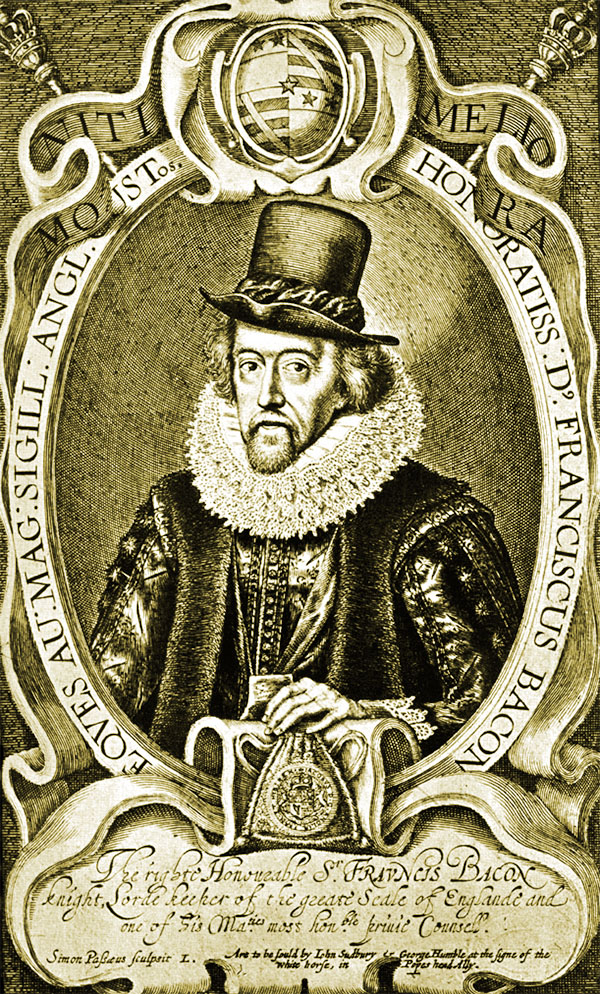
Sir Francis Bacon, Baron Verulam of Verulam, Viscount St Alban
Philosopher, Poet, Lawyer, Statesman, Historian, Intelligencer, Cryptographer, Author, Essayist, Intellectual Reformer, Instaurator of the Royal Society and modern science.
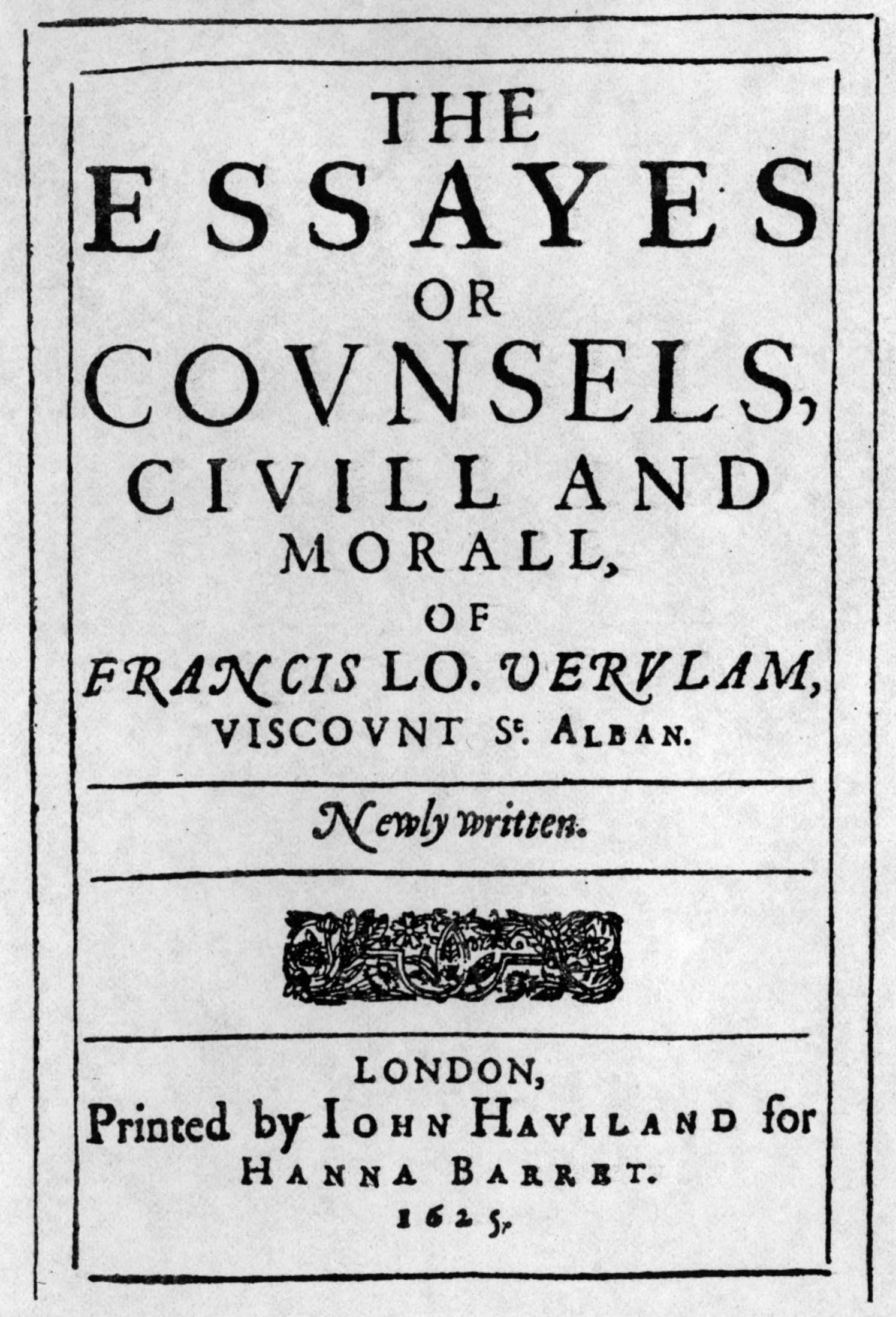
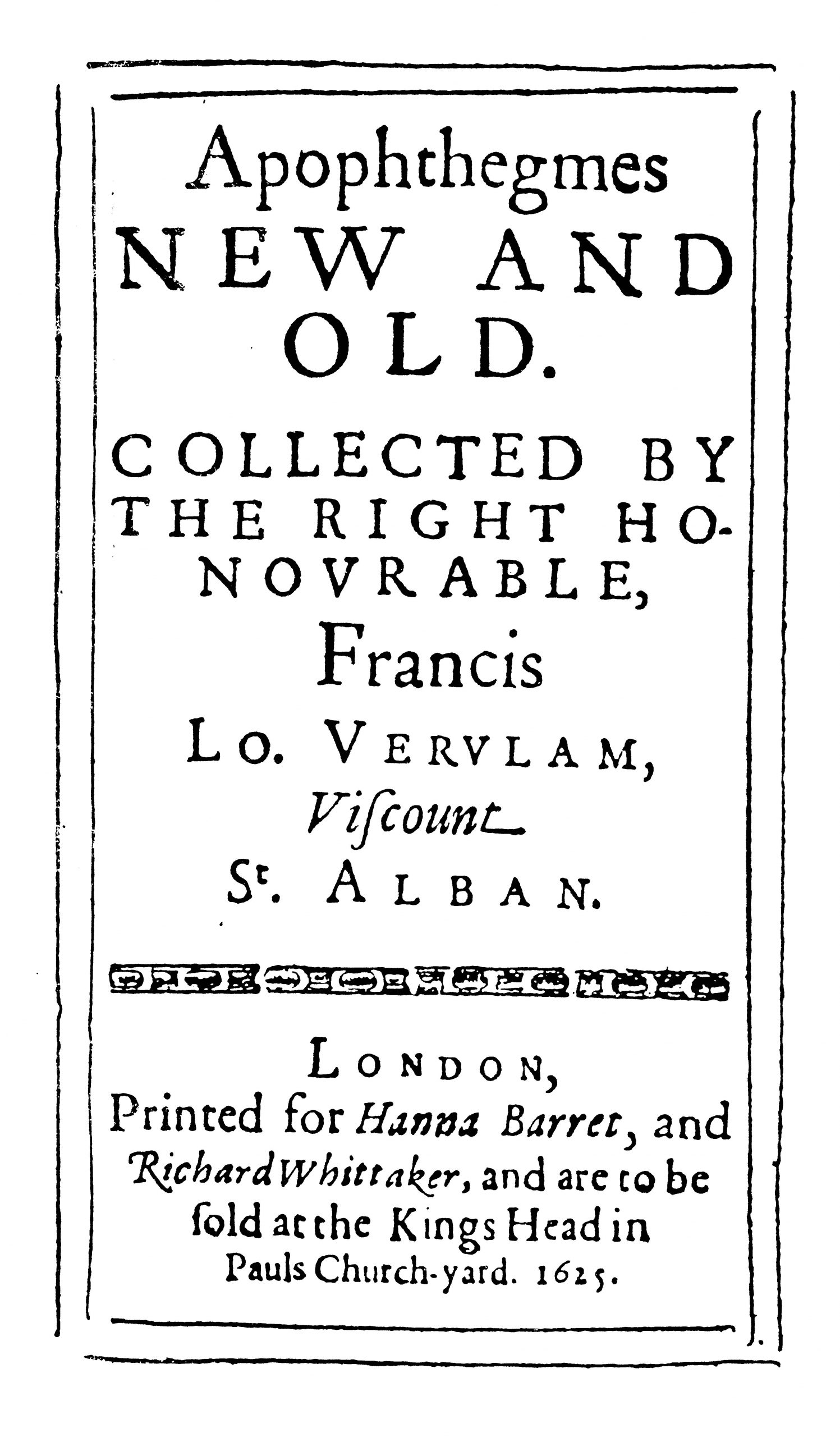
Knighted 23 July 1603; created Baron Verulam of Verulam 12 July 1618, and Viscount St Alban 27 January 1621. The two titles are cryptic.
Francis Rosicrosse, Elias the Artist
Sir Francis Bacon, aka Francis Rosicrosse, was the “great light”, Elias the Artist, herald of the new Age now dawning. Such a herald, like the biblical prophet Elijah, is a preparer of the way, who helps us prepare for and experience the Greater Light that will appear "at the end of the Age".
The Great Instauration
Francis Bacon gifted to the world a scientific project known as ‘The Great Instauration’, so that we might discover the great truths or laws of life, physical and metaphysical, and put them to good use for the help, upliftment and enlightenment of the whole world.
Art of Discovery
Francis Bacon also gave us an Art of Discovery by means of which we might be trained in the art of discovering these great truths, the greatest of which he pointed out was love – love in action – the supreme law of the universe.
Shakespeare
Francis Bacon, with the help of others, provided the Shakespeare works, to show us human nature, good and bad, as if in a mirror, and thus wake us up to how hate, lies, greed and cruelty hurt and destroy our souls, our culture and our civilisations, whilst love and friendship nurture, support, help, rescue, sustain and transform us into creative, happy and enlightened human beings.
Freemasonry and Rosicrucianism
Francis Bacon, with the help of others, reformed and reconstituted the Acception core of Operative Freemasonry as Speculative Freemasonry so as to provide a training school in morals, by means of which the higher Rosicrucian degrees of enlightenment might be reached, wherein love, friendship and charity is the primary practice. For this reason, he was given the title Viscount St Alban, named after the Romano-British saint who founded and was First Grand Master of British Operative Freemasonry. ("British" and "Britain" is referred to as "English" and "England" in the Freemasonic Legend of the Craft when referring to the first St Alban.)
The Gemini Saints, St Alban I and St Alban II.
Because Francis Bacon was uniquely titled Viscount Saint Alban, it means that there are, in fact, two saints called Alban – the Romano-British Saint Alban (d. 306), who founded Operative Freemasonry in Britannia (Roman Britain), and the English Viscount Saint Alban (d. 1626), who founded Speculative Freemasonry in England (which then spread abroad to Scotland, Ireland, Europe and North America).
Both saints underwent a martyrdom in order to protect another person – St Alban I physically, by being tried and beheaded, and St Alban II psychologically, by being impeached and sacrificing his "good name".
Our "good name" is our God-name, wherein God is love, whose character or nature is goodness (as Francis Bacon points out in his essay, Of Goodness & Goodness of Nature). The word 'God' is, therefore, equated with the word 'good', which means 'loving'. Our "good name" lies in our heart. It is equated with the "Name of God". This is our essential Being.
Head and heart are symbolised by the twin Great Pillars, Boaz and Jachin – the Pillar of Strength (Judgement) and Pillar of Wisdom – which are personified in the classical Gemini myth.
Head and heart also refer to the respective martyrdoms of the two saints, St Alban I and St Alban II – hence they symbolise the Gemini ('Twins').
When walking hand-in-hand, as it were, the two saints walk the middle path, symbolised by the middle pillar, the Pillar of Beauty, which leads to enlightenment, wherein one experiences and knows the Greater Light.
© Peter Dawkins, FBRT